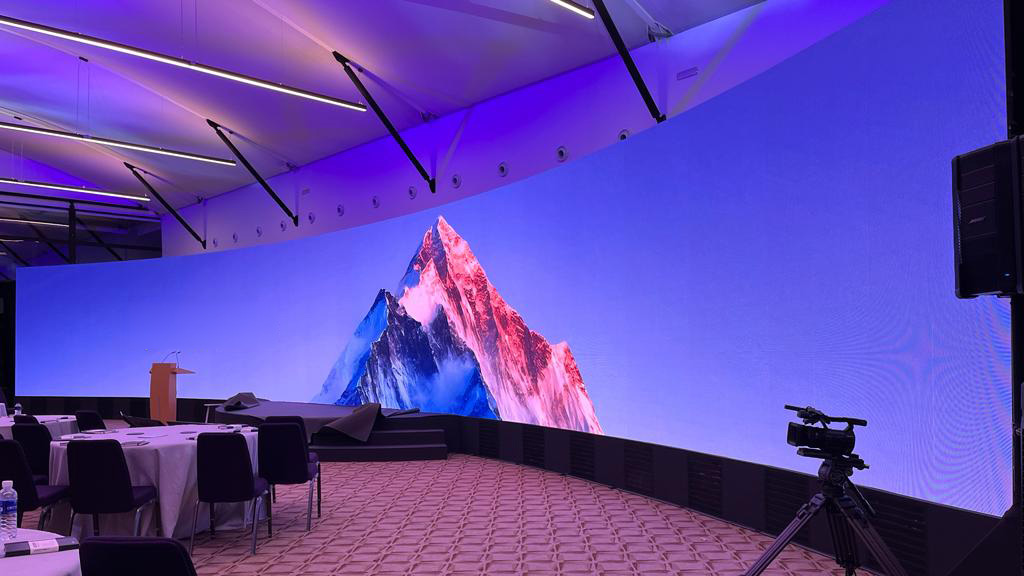
The LED Wall vs Projector Debate
One of the most significant decisions when planning an event's visual presentation is whether to use an LED video wall or a projector. Both technologies have distinct advantages and limitations, and the right choice depends on your specific venue, audience, budget, and content requirements. This guide breaks down the key differences to help you make an informed decision.
In Singapore's event landscape, both technologies are widely used. Large corporate conferences often feature LED walls for their pristine image quality and brightness in well-lit venues. Intimate dinners and budget-conscious events might opt for projectors to maximize value. The key is understanding how each technology performs under different conditions.
Image Quality Comparison
LED Video Walls
Modern LED video walls, particularly those from premium manufacturers like Barco and Panasonic, deliver exceptional image quality with vibrant colors, deep blacks, and high contrast ratios. The image quality remains consistent from any viewing angle, and there's no image degradation even when viewed at extreme angles (unlike projection).
LED walls use pixel technology where thousands of small LED modules display content. The pixel pitch (spacing between pixels) determines resolution. Smaller pixel pitches (like P2.5 or P3.9) create sharper images suitable for close viewing distances, while larger pitches (P4.8 or P6.25) work well for audiences sitting further back.
Because LED walls emit their own light rather than relying on projected light bouncing off a surface, image quality is unaffected by ambient light conditions. Whether your venue is brightly lit or completely dark, the LED wall delivers consistent, vibrant visuals.
Projectors
High-end projectors can deliver stunning image quality when conditions are favorable, particularly in darkened environments. Professional projectors achieve excellent color accuracy and can project large images from a relatively small footprint. However, image quality depends heavily on screen conditions, projector focus, and ambient light.
Projectors struggle significantly in bright or well-lit venues. Ambient light washes out the projected image, reducing contrast and color vibrancy. To achieve acceptable image quality with a projector in a lit venue, you typically need to darken the room substantially or use a much brighter (and more expensive) projector.
Viewing angles are also limited with projectors. Viewers sitting far to the side of a projection screen see a washed-out, distorted image compared to those seated directly in front. This makes projectors less suitable for venues with wide seating arrangements.
Brightness and Visibility
LED Video Walls
LED walls maintain exceptional brightness and visibility in any lighting condition, including direct sunlight for outdoor events. This makes them ideal for bright venues like conference halls with windows, ballrooms with stage lighting, and outdoor events.
Professional LED displays like Barco and Panasonic systems reach brightness levels of 800–1200 nits (a measure of light intensity), ensuring content remains visible even in extremely bright environments. For comparison, a typical computer monitor is around 300 nits.
Projectors
Standard conference projectors typically produce 3000–5000 lumens. In a darkened room, this is sufficient for audiences up to 300–500 people depending on screen size. In a brightly lit venue, you'd need specialized high-lumen projectors (8000+ lumens) to achieve acceptable visibility, and these are significantly more expensive to rent.
The brightness challenge with projectors means that in typical event scenarios (ballrooms with ambient lighting, daytime events), projectors often deliver a mediocre visual experience compared to what audiences expect from modern events.
Setup and Space Requirements
LED Video Walls
LED walls mount directly to a wall or structure without requiring ceiling clearance or throw distance (the distance between projector and screen). They're built from modular panels that connect together, allowing flexible sizing.
Setup can range from 2–4 hours for small walls to a full day for large, complex installations. The footprint is compact—a 10-meter wide LED wall takes up roughly 10 meters of wall or truss space and projects forward only 10–15 centimeters.
LED walls require proper power distribution (typically 32–63 amp circuits for large displays) and cooling ventilation. Professional installation is essential to ensure structural safety and electrical compliance.
Projectors
Projectors are simpler to set up (usually 30–60 minutes) and require less technical expertise. They need ceiling-mounted brackets or a portable stand, plus sufficient throw distance between projector and screen. A 6-meter wide projection screen typically requires 8–12 meters of throw distance, which may not fit in smaller venues.
Projectors are more portable and flexible for venues where you can't modify walls or structure. However, they create sight-line challenges—someone sitting between the projector and screen sees a large shadow on the image.
Cost Comparison
LED Video Walls
LED wall rental costs depend on wall size and pixel pitch. Small walls (4x3 meters) typically cost $3,000–$6,000 to rent for a day. Medium walls (6x4 meters) range from $6,000–$12,000. Large walls (10x6 meters or larger) cost $12,000–$25,000+ for a day's rental plus technical support.
While the upfront cost appears high, LED walls offer superior value because they eliminate the need for darkening a room, they're visible from every angle, and they deliver the premium aesthetic that modern audiences expect from professional events.
Projectors
Projectors are less expensive upfront. A standard projector rental with screen and basic stand setup costs $500–$1,500 for a day. High-brightness projectors suitable for lit venues cost $2,000–$4,000, and specialized cinema projectors can exceed $5,000 daily.
However, projector costs can escalate quickly when you factor in additional requirements: renting a projection screen, darkening equipment (blackout curtains or lighting management), video switching equipment, and additional technical support for troubleshooting light washout issues.
Detailed Comparison Table
| Feature | LED Video Wall | Projector |
|---|---|---|
| Image Quality | Exceptional, consistent from any angle | Excellent in dark rooms, degrades in light |
| Brightness | 800–1200+ nits, unaffected by ambient light | 3000–5000 lumens; diminished in bright venues |
| Viewing Angles | 150°+ from any direction | Limited; side viewers see distorted image |
| Setup Complexity | Moderate to complex; requires power and structure | Simple and straightforward |
| Setup Time | 2–6 hours depending on size | 30–60 minutes |
| Portability | Low; requires truck and specialized installation | High; can fit in a car for small setups |
| Space Requirements | Minimal depth (~15cm); needs wall or truss | Requires throw distance (8–12m for 6m screen) |
| Room Lighting Needs | Works in any lighting condition | Requires dark or dimmed room for quality image |
| Daily Rental Cost (standard) | $3,000–$25,000+ depending on size | $500–$1,500 |
| Typical Total Cost (with support) | $5,000–$30,000+ including crew | $2,000–$6,000 including screen and support |
| Color Accuracy | Excellent; calibrated for consistency | Very good in optimal conditions |
| Durability | Designed for repeated professional use | Reliable but bulb replacement needed over time |
| Best For | Corporate events, large audiences, bright venues, premium aesthetic | Small meetings, budget events, dark venues, short-term rentals |
Specific Venue Scenarios
Corporate Conference with Windows and Daylight
Recommendation: LED Video Wall
A ballroom or conference center with windows allowing in natural light is an ideal scenario for an LED wall. Projectors in such environments struggle significantly, even high-brightness models. An LED wall maintains crisp, vibrant visuals throughout the day regardless of window light. Attendees in all sections of the room see the presentation equally clearly, which is especially important for conference presentations where visibility is critical.
The premium aesthetic of an LED wall also enhances the professional perception of your corporate event, signaling investment in quality production.
Evening Gala Dinner or Wedding Reception
Recommendation: LED Video Wall for premium event, Projector for budget-conscious
A dimly lit ballroom evening event could work with either technology. An LED wall creates a spectacular visual backdrop and is ideal if you want to display full-screen imagery, dynamic graphics, or live video feeds. A projector is more cost-effective if you only need to display a few static images (like welcome slides or a photo slideshow) and are in a fully darkened ballroom.
However, consider that wedding guests often move around the venue—they might be at bars, on dance floors, or in lounge areas. A projector mounted on one wall is only visible from certain angles. An LED wall positioned prominently is visible from throughout the space and creates a stronger visual focal point for photos and ambiance.
Small Training Room or Boardroom (20–50 People)
Recommendation: Projector
For intimate corporate training sessions in conference rooms, a projector with a small projection screen is cost-effective and appropriate. These spaces are typically designed with controlled lighting that can be darkened, and the smaller audience means a smaller screen works fine. A basic projector setup might cost only $500–$800 for the day—a fraction of an LED wall rental.
In this scenario, the investment in an expensive LED wall would be disproportionate to the venue size and audience expectations.
Outdoor Concert or Festival (500+ People)
Recommendation: LED Video Wall
Outdoor events in daylight demand an LED wall. Projectors simply cannot compete with the brightness of sunlight, and even if you eliminate direct sun with large umbrellas or tents, you'd need extremely expensive high-brightness projectors. An LED wall is fully visible in sunlight and creates a professional concert experience audiences expect.
For evening outdoor events, LED walls still have advantages—they're brighter than necessary for dark conditions, creating dramatic visual impact, and they don't suffer from projector issues like keystone distortion or focus problems.
Trade Show Booth or Exhibition Space
Recommendation: LED Video Wall
Exhibition halls are notoriously brightly lit with fluorescent or LED ceiling lights. A projector in this environment would be nearly invisible. An LED wall, even a modest P4.8 pixel pitch display, cuts through ambient light and attracts attention. The eye-catching visual display helps your booth stand out in a crowded exhibition hall, making it a worthwhile investment for high-traffic events like Singapore's trade shows at EXPO or Suntec City.
Technical Considerations
Signal and Content Delivery
Both LED walls and projectors require proper video signal delivery. Modern systems use HDMI, SDI, or network-based protocols like AES. Ensure your event has appropriate video distribution equipment and that presenters' laptops are compatible. LED walls often support multiple inputs simultaneously, allowing different content zones, while projectors typically support one input stream.
Resolution and Pixel Pitch
LED wall resolution depends on pixel pitch—smaller pitch means higher resolution. For content that will be viewed from up close (within 2–3 meters), specify a pixel pitch of P2.5 or smaller. For audiences further away, P3.9–P4.8 is acceptable. Professional LED providers like Barco and Panasonic offer pixel pitches from P1.2 to P6.25 to match different viewing distances.
Projectors don't have a pixel pitch consideration—resolution depends on the projector model (typically 1920x1200 for modern projectors), which is usually sufficient for presentations.
Maintenance and Durability
LED walls are constructed for repeated professional use and have long operational lifespans (50,000+ hours). Projectors require bulb replacement after 2,000–4,000 hours of use, which can be an ongoing maintenance cost for frequent users.
Content Planning for Each Technology
For LED Walls
Content should be optimized for the LED wall's wide color gamut and brightness. Avoid very dark backgrounds that might not show detail on an LED display—instead, use rich, vibrant colors. Ensure graphics and text are large and readable; small fonts disappear on large displays. Take advantage of the wall's capabilities with full-screen video, dynamic graphics, and eye-catching color transitions.
For Projectors
Content should be optimized for the typical projector's lower brightness and contrast ratio compared to LED. Use sufficient contrast between text and backgrounds—light text on dark backgrounds projects better than dark text on light backgrounds. Avoid very detailed graphics that might appear pixelated when projected.
Hybrid Approaches
Some events use both technologies strategically. For example, a large conference might feature an LED wall for the main stage presentations (ensuring all 500 attendees see content clearly) while breakout rooms use projectors (more cost-effective for smaller groups). Or an exhibition booth might use an LED wall as the focal point with small projector displays in side areas.
These hybrid approaches can optimize both cost and visual impact, though they do add complexity to technical coordination.
Making Your Decision: Key Questions to Ask
- How large is your audience, and how spread out will they be?
- What's the ambient lighting in your venue? Can it be darkened?
- How important is the visual experience to your event's success?
- What's your budget for visual presentation?
- What content will be displayed (presentations, video, live feeds)?
- Will viewers be stationary or moving around the venue?
- Is portability and quick setup important?
- What's the viewing distance from audience to display?
Conclusion
LED video walls and projectors serve different needs. LED walls excel in bright venues, deliver superior image quality from any angle, and create a premium aesthetic appropriate for high-impact corporate events and large audiences. They're the clear choice for modern, professional events where visual quality is paramount.
Projectors remain valuable for smaller, more intimate events in controlled lighting environments where budget is the primary concern. They're simpler to set up and appropriate for straightforward presentations in boardrooms or training spaces.
Your choice should be driven by your venue characteristics, audience size, content requirements, and budget. Professional AV providers like AVL Services can assess your specific venue and event requirements to recommend the technology that will best serve your audience and objectives.
Plan your next event with AVL Services
Our team handles everything from pre-event planning through technical rehearsal to day-of execution — for corporate events, weddings, concerts, exhibitions and hybrid productions across Singapore.